
Why Masterjis Fool 90% of Young Fashion Designers (And How to Stop Them)
Learn the needle, differential-feed and bobbin-tension checks that help fashion designers lead tailoring and sampling with authority.
Here is a scene that plays out in hundreds of fashion boutiques across Shahpur Jat, Hauz Khas, Rohini and Mumbai every afternoon: a young designer hands a sketch to her Masterji. Two days later, the sample comes back. The armhole is puckering. The collar sits twisted. The hemline ripples like a wave. The designer points out the defect.
When ‘bad fabric’ becomes an expensive excuse
The Masterji shrugs and says: ‘Madam, kapda hi kharab hai. Ye fabric me fall nahi aayega.’ (The fabric itself is defective. It cannot hold this drape.)
The designer spent three years in fashion school. She knows color theory. She knows art history. She doesn’t know machine tension. So she accepts the blame. She buys new fabric. She wastes ₹8,000. And her client gets a delayed, mediocre garment.
The Brutal Truth from 52 Years in the Trade
Last week, while sitting with Asia’s Big Commercial Machinery Businessman—a man who supplies production units for Zara, Manish Malhotra, H&M and Rahul Mishra—I brought up this exact problem. He laughed out loud.
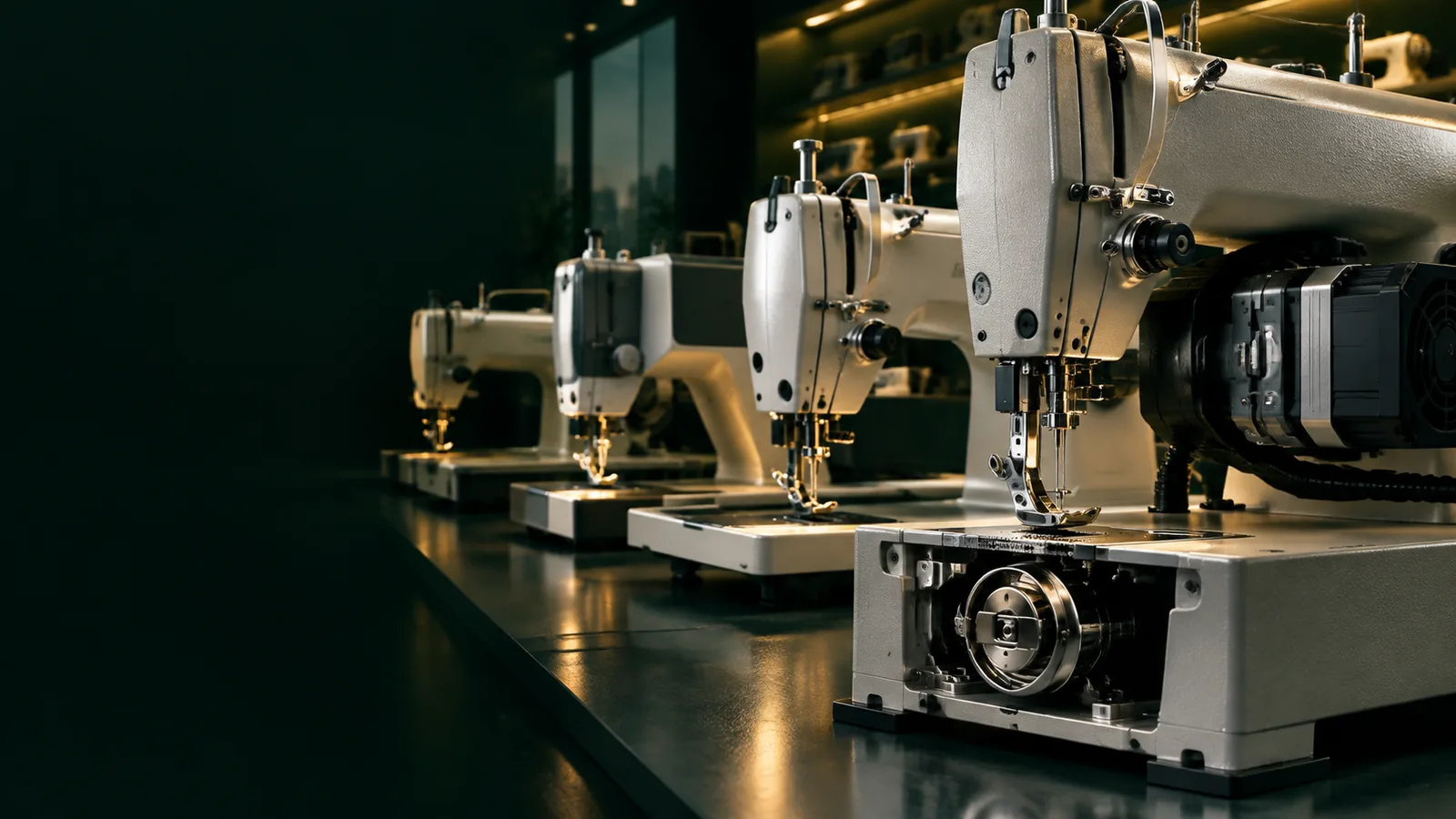
What actually caused the flaw? When your garment comes out wrong, it is rarely ‘bad fabric.’ It is almost always one of three mechanical errors your college never taught you.
1. The Needle Deflection Problem
What your tailor says: ‘The silk is tearing along the seam.’
What actually happened: He used a heavy Size 16 or 18 needle meant for cotton drills on delicate silk chiffon. He needed a microtex Size 9 or 11 needle with a ballpoint tip.
The fix: A 30-second needle swap that costs ₹15.

2. The Differential Feed Failure
What your tailor says: ‘This stretch fabric stretches out of shape when we stitch.’
What actually happened: On an industrial overlock, the front feed dog and rear feed dog can move at different speeds—differential feed. If set incorrectly, it either stretches the seam or gathers it like a ruffle.
The fix: Turning one screw on the side of the machine.
3. The Bobbin Tension Trap
What your tailor says: ‘Thread is breaking because the thread is poor quality.’
What actually happened: The bobbin case tension spring is filled with lint and overtightened, fighting the upper thread tension.
The fix: A quick drop of sewing oil and a quarter-turn of a flathead screw.
Knowledge is Authority
When you walk into your workshop and say: ‘Masterji, change this to an 11-number organza needle, drop the presser foot pressure by two turns, and balance the lower looper thread’—something miraculous happens.
Your Masterji stops making excuses. Your samples come out right on the first attempt. And your studio stops losing money.
Traditional College: Teaches you how to draw on paper. Leaves you completely illiterate on production mechanics. Your tailors dictate what is ‘possible.’ The result is high sample rejection and ruined margins.
EIF Practical Approach: You master the tech pack, the digital 3D drape, and industrial production. You command your production floor with authority. Samples get approved in Round 1. Zero wasted fabric, maximum profit.
Stop Being an Amateur in Your Own Studio
At Emerald Institute of Fashion, we bridge the gap between creative vision and industrial reality. You don’t just graduate as a designer; you graduate as a fashion brand owner who knows how to run a label. Apply now.
Find the program that fits your next step
Explore EIF's programs to compare the learning focus, duration and starting fees before applying.