Bad prompts produce glossy nonsense. Good prompts read like a brief you would give a pattern master — specific about garment, fabric, body and light.
The structure that works
Garment
Type, silhouette, length, neckline, sleeve, closure.
Fabric
Fibre, weight, finish and how it should fall.
Detail
Seams, pleats, embroidery, trims — the things you would spec.
Context
Body, pose, background, light and camera distance.
Exclusions
What you do not want, stated plainly.
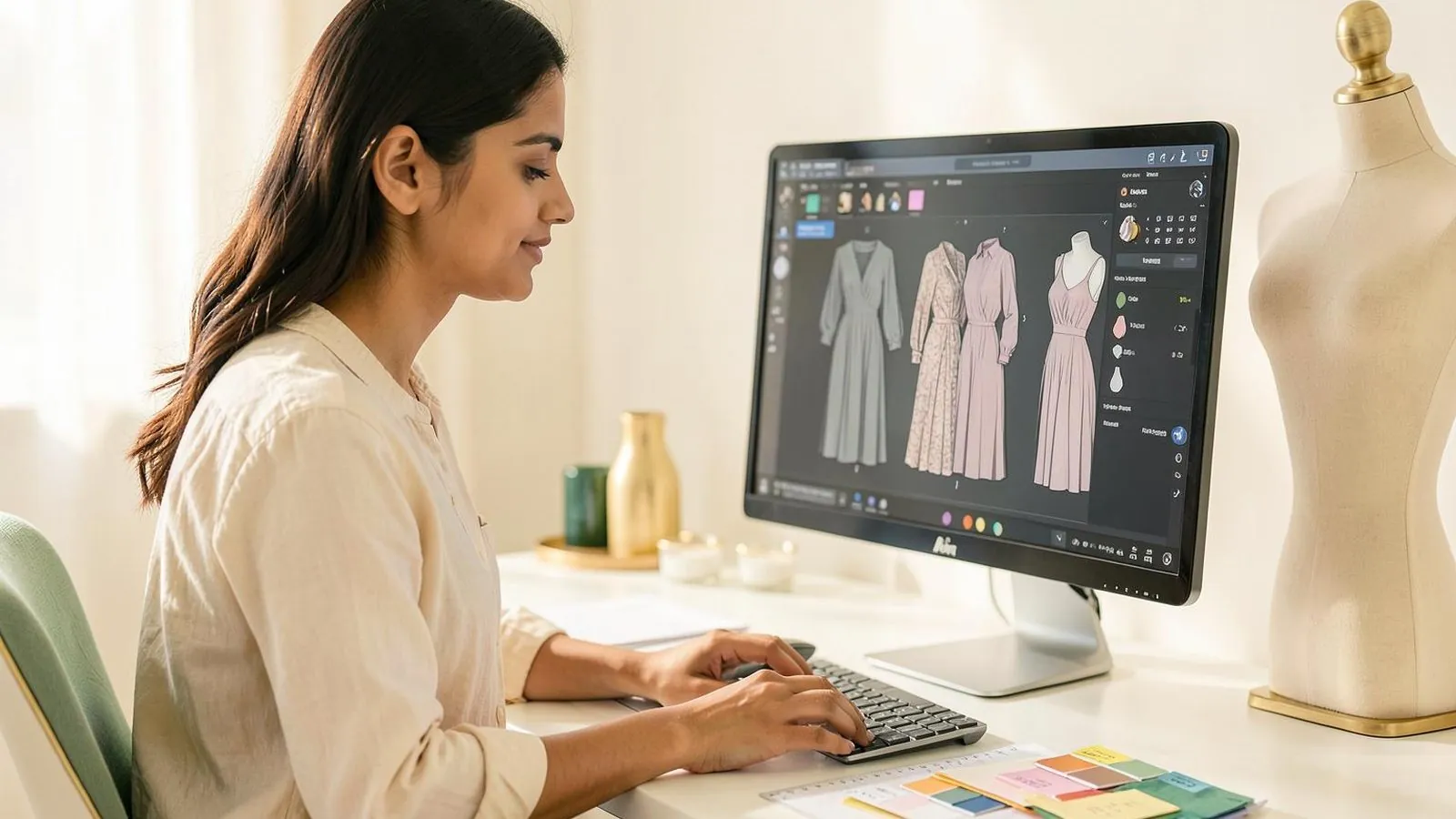
Use garment vocabulary, not adjectives
"Elegant modern dress" gives you the internet's average. "Bias-cut crepe slip dress, cowl neck, French seams, mid-calf, soft daylight" gives you something you can cost. Every word from a spec sheet is worth ten mood words.
Iterate instead of re-rolling
Change one variable at a time and keep a log of the prompt beside the output. Designers who re-roll randomly are gambling; designers who iterate build a private library of prompts that reliably produce their own aesthetic.
Then bring it back to craft
Redraw the winning direction as a flat, check the seams close, choose a real fabric at a real price. The prompt is the beginning of the design process, never the end of it.
Brief the machine like a professional
The people who get the best AI results are the ones who already know how clothes are made.
Ready to build your future-proof fashion career?
Applications for Batch '26 are open. Seats are limited.
Apply Now