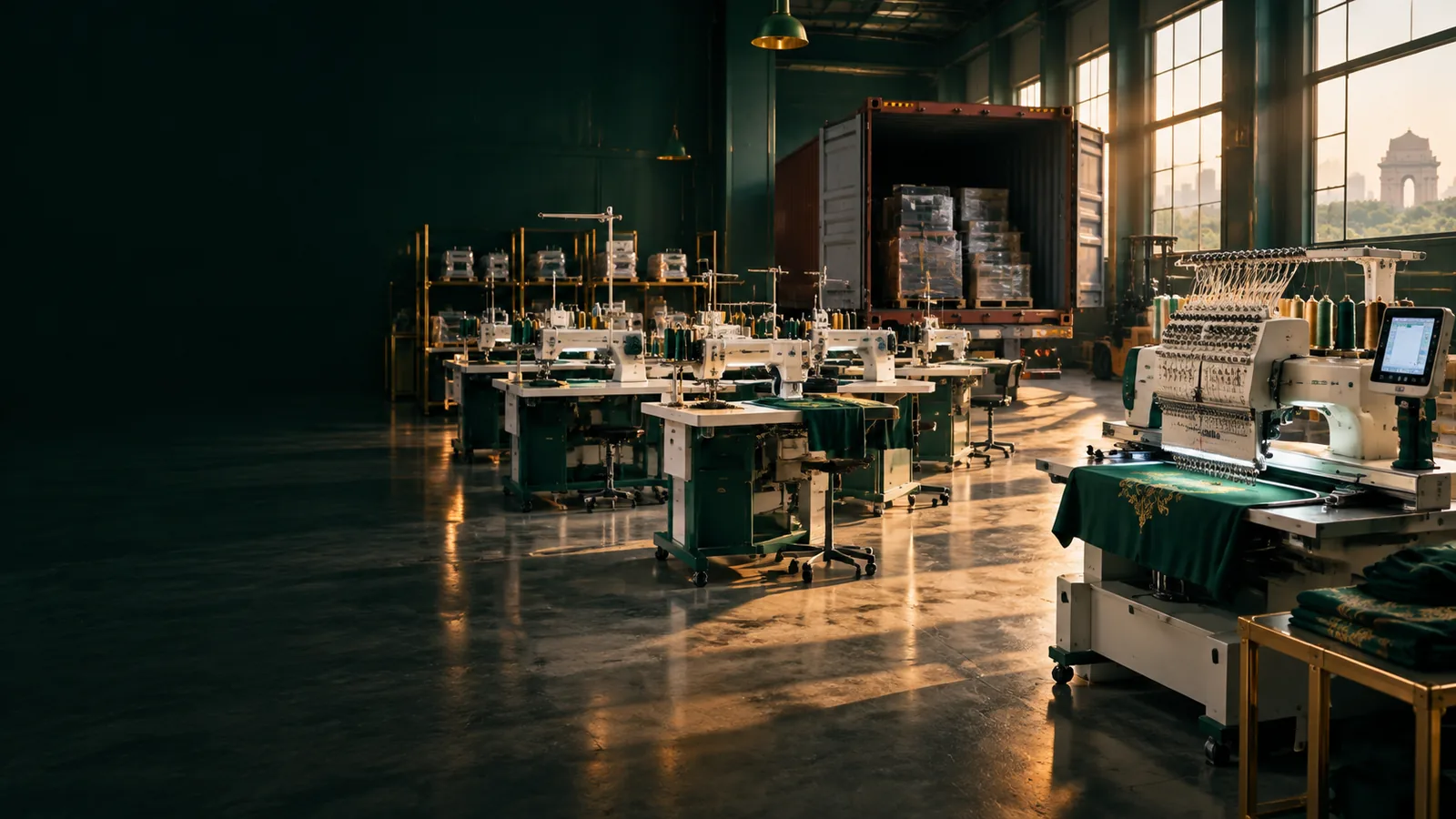
1,200 Machines in a Single Container: What Asia’s Big Commercial Machinery Businessman Told Me About Real Fashion Scale
What 1,200 commercial machines in one container reveal about real fashion scale, boutique equipment and production knowledge.
If you walk into a traditional fashion college classroom today, you will notice something misleading. Students are sitting in front of lightweight, domestic plastic sewing machines. They press the pedal. The table shakes. The thread snaps. And their teacher tells them: ‘Just be more patient with your hands.’
One meeting that put fashion scale into perspective
Last week, I sat in an office in South Delhi with one of Asia’s largest commercial machinery distributors. He has been in this trade since 1972. Over five decades.
He owns two commercial machinery brands of his own. And he commands authorized distributorships for virtually every giant in industrial apparel making: Juki. Jack. Singer. Usha. Silver Threads. Yamuna. Rohila. Blestar. Bauyo.
His machinery runs on the factory floors of the export factories and production houses producing collections for Zara, Manish Malhotra, H&M, Rahul Mishra, Marks & Spencer, Fabindia, Raymond, and several of India’s top designer couture houses.
Midway through our meeting, he casually looked at me and said something that should wake up every fashion student in this country: ‘In just one container import, we bring in around 1,200 commercial machines. And containers keep rolling in.’
Let that number sink in. 1,200 industrial machines. In a single steel shipping container at the port. Multiplied across continuous shipments arriving every month. That is not a Pinterest moodboard or an aesthetic runway sketch. That is the raw volume of the Indian garment industry.
The ‘Domestic Machine’ Lie
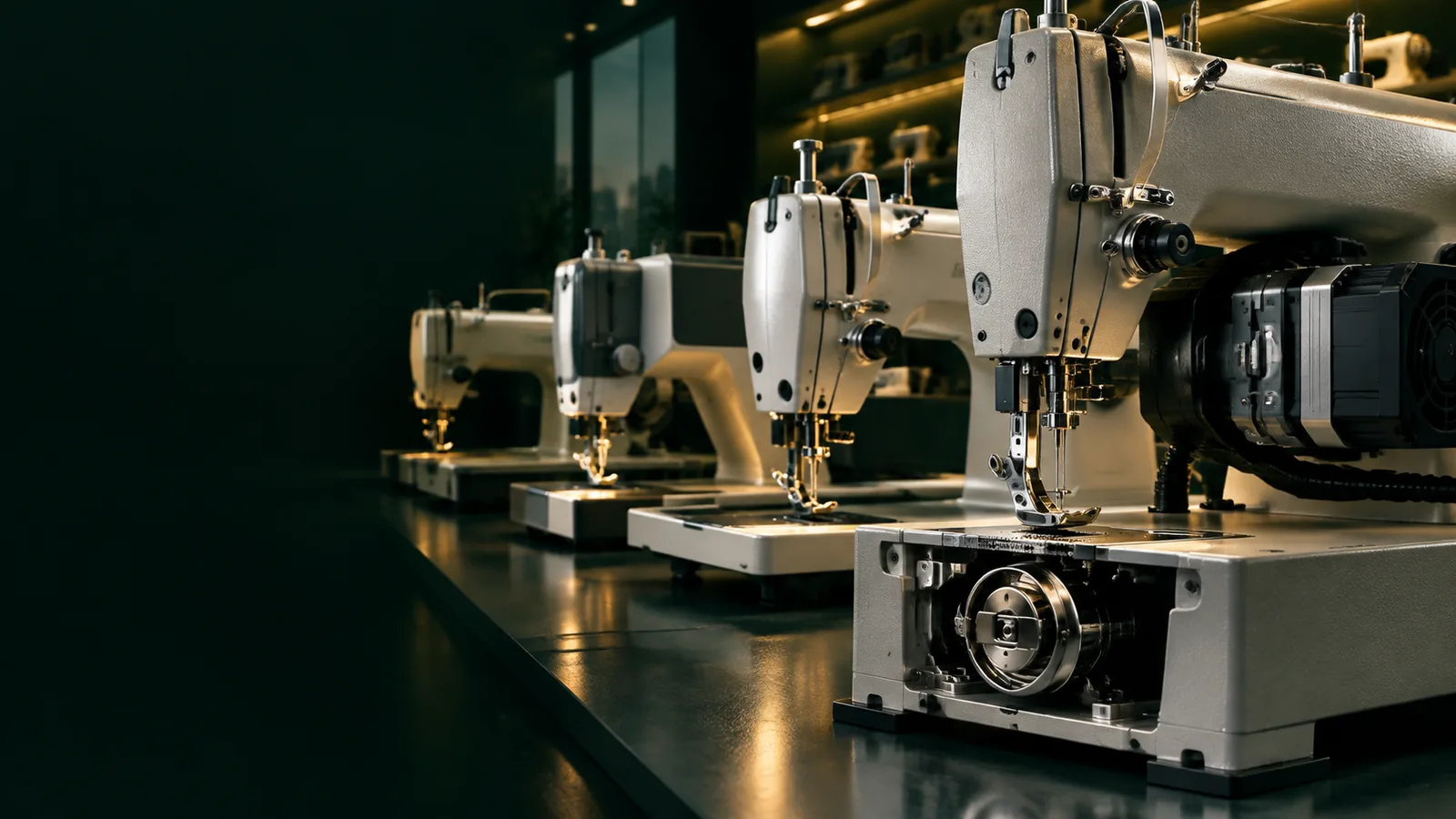
Traditional fashion schools sell you a fantasy. They charge ₹10 Lakhs to ₹15 Lakhs in tuition, but they never let you touch a true industrial direct-drive lockstitch or a computerized servo workstation.
When a graduate starts their own boutique or walks onto a factory floor, they face the brutal truth: a domestic machine takes 20 minutes to struggle through heavy denim or multi-layer bridal velvet. The seam puckers, the needle deflects, and the client rejects the entire garment.
Why Ignorance of Machinery Gets You Fooled
I asked him what happens when young designers come to buy equipment for their new labels. He didn’t sugarcoat it: ‘They walk in asking for cute machines. I tell them: cute doesn’t stitch 50 or 500 meters of export order. If you don’t understand machine, your masterji and tailor will fool you every single day. They will tell you a design is impossible or will take extra time which will be borne out of your pocket.’
The factory floor doesn’t run on inspiration. It runs on mechanical precision.
The 3-Machine Formula for a Serious Boutique
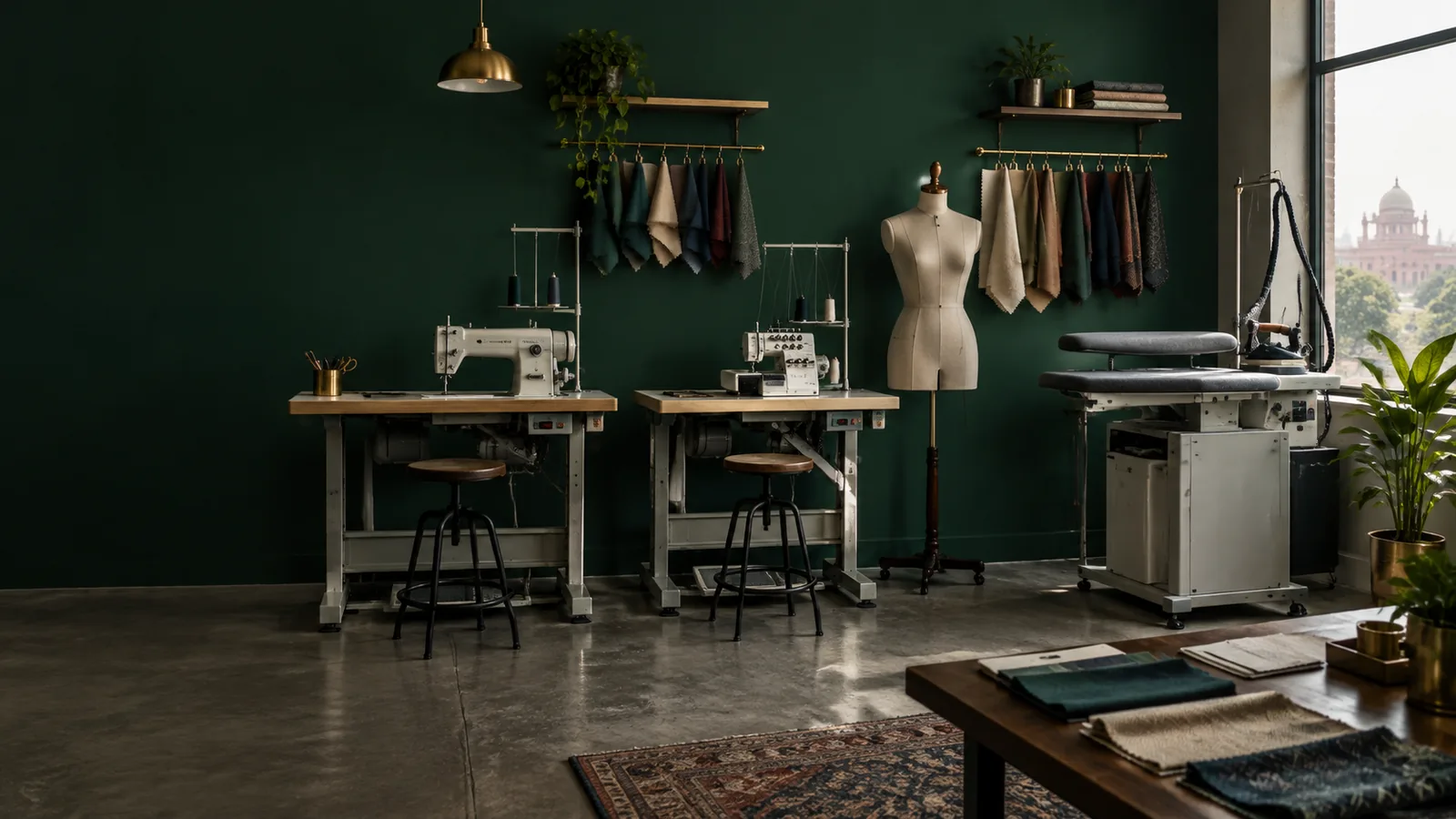
The most expensive mistake emerging label owners make is buying the wrong machine. They either buy cheap home machines that burn out in six months, or buy multi-needle monsters they can’t service. Here is the exact three-machine foundation the industry veteran laid out.
Old Way: The designer buys a ₹12,000 domestic plastic machine. The motor vibrates and can’t penetrate thick seams. Edges are finished with a messy hand zig-zag. Ironing is done with a home dry iron. The garment looks homemade and cheap. The boutique struggles to charge premium rates.
EIF Way: Machine 1 is a Direct-Drive Single-Needle Lockstitch with zero vibration, silent operation and auto needle-down. Machine 2 is a 4-Thread Industrial Overlock for clean, factory-grade inner edge seams. Machine 3 is a Gravity-Feed Steam Press for couture-grade seam splitting and collar fusing. The total setup is under ₹80,000 in Delhi’s machinery wholesale markets. The studio produces luxury, export-quality finishing from Day 1.
Brand Name vs. After-Sales Reality
Anyone can buy an orphan machine on an e-commerce website for ₹3,000 less. Then a looper snaps during wedding season. And you realize there is no technician in your entire pincode who knows how to calibrate it.
Juki (Japan): The gold standard. A properly oiled Juki lockstitch in a Delhi unit can run for 20 years without losing sub-millimeter accuracy.
Jack: The technology disruptor. Digital stitch controls and direct-drive servo efficiency at a price point built for young founders.
Yamuna & Rohila: Indian industrial workhorses engineered for rugged, non-stop daily factory workloads.
The Safety Net
Parents and students ask me: ‘Will AI and technology replace garment making?’ My answer is simple.
If you are just an ‘Artist’ who only knows how to sketch on paper, yes. AI already creates sketches in four seconds.
If you understand the entire pipeline—from digital AI concept to 3D tech pack, fabric sourcing, and the industrial machines that stitch the seams—no. You are the pilot of the plane. You know how things actually get built.
The Reality Check
The market is flooded with designers who know how to talk about fashion, but have never heard a direct-drive servo motor kick into gear. The people moving containers of 1,200 machines are not guessing. They are fueling the labels that are actually making money.
You have to decide which side of the industry you want to belong to: the side that draws pictures and hopes for the best, or the side that understands the machine and controls the production.
Don’t Design in a Vacuum
At EIF, we don’t just teach you how to sketch. We teach you how garments are constructed, costed, and manufactured in the real world. You walk into your first studio knowing exactly what to build and how to build it.
Ready to build a real fashion label? Learn the skills that the industry actually runs on. Apply now.
Find the program that fits your next step
Explore EIF's programs to compare the learning focus, duration and starting fees before applying.